Positive Intelligence® for Leadership Teams

Your transformation doesn't stall on capability. It stalls on what sits underneath.

The moment pressure rises, the conversation stops being about the work. Some people go quiet. Others get defensive, or come out swinging. Both cost you the same week.

For leadership teams in companies going through change · online · six months

Deutsch

Is this your moment?

This is for you if any of this is going on right now.

  • AI is changing roles and processes, and everyone knows it. What nobody says is which ones. And the change that should follow sits there undone.
  • A restructure is announced or under way — a merger of sites, a new structure, a new operating model.
  • You are growing faster than your leadership bench is.
  • A new managing director, a new leadership team, the old reflexes.
  • Two leaders have left, and nobody inside has put their hand up for the role.
  • An employee survey is sitting in a drawer because nobody wants to be the one to open it.

Two ways this goes wrong.

And one of them looks like a healthy culture.

The quiet one

Everyone nods in the meeting. Something else happens outside it.

Nobody says what they actually think, because the objection costs more than the silence. Anyone who admits during a restructure that they think a decision is wrong is betting their position in a pecking order that is being rewritten while they speak. Anyone who admits they don't know how to get their team through the next quarter has made themselves a target.

That is not cowardice. That is an accurate read of the risk.

And from where you sit, it feels like harmony. Until the day you find out that three people in the room have been thinking something else for months.

The loud one

Under pressure, everyone's protective pattern fires differently.

One tightens control. Another pulls back and waits. A third pushes harder, because speed feels like control. A fourth wants to keep everyone happy. A fifth takes every proposal apart until there is nothing left that anyone could decide on.

Nobody means any harm. Everybody wants the same thing. And the decision still takes three meetings instead of one.

What both cost you

Both end in the same place. Because nobody recognises their own reflex as a reflex, the argument shifts ground. And suddenly it isn't about the question any more. It's about the person who asked it.

The tipping moment

There is a point where a discussion turns. You can learn to catch it.

The skill is one thing. What it frees up day to day is the more interesting part. What follows are the things that decide how a team behaves under pressure, and they show up in ordinary working weeks.

Between "I think your proposal is wrong" and "you are the problem" there are a few seconds. We call it the tipping moment. In those seconds it is decided whether a disagreement moves you forward or costs you trust.

The reflex that sets it off fires in twelve milliseconds. The conscious thought that could stop it takes forty to five hundred. So you can't reason your way out of it. It is trained in the body.

Noticing that moment while it is happening is a trainable skill. What comes after it is the real work.

Often that decision means doing something that feels hard: voicing the objection after all, asking the question that makes the meeting run long, walking into the disagreement you have been stepping around for three weeks. It costs something every time. That is what gets trained here.

What you have afterwards

A leadership team that can disagree without damaging itself — and decides faster afterwards than it did before.

Things get said

For the quiet failure mode: the objection lands in the meeting instead of the corridor. Because saying it has become the cheaper option.

A shared word for the tipping moment

For the loud one: "we've just tipped" is a sentence with no target. That's why anyone can say it. That's why it works.

Psychological safety that actually arrives

With the leader first: someone who can steady themselves needs less cover. And then one level down — tension is contagious, and so is calm. The level below you gets whatever you have in the room.

The capacity for conflict, and what comes of it

A team that can hold a disagreement produces buy-in rather than compliance. Because everyone was heard before the decision was made. And ownership for what happens next comes out of that.

Decisions hold.

What gets agreed sticks, including with the people who argued against it. That saves you the second and third round.

The transformation gets its people.

The measures that are coming anyway get backed by your leadership team instead of forced through against its own resistance. Same programme, different speed.

Exhaustion drops, with the circumstances unchanged.

The load stays. What changes is what it does to the people carrying it. How far that goes depends on how consistently people do the daily practice.

What matters most is that it belongs to everyone. The leadership team trains as a whole, including the most senior leader of that unit — so the shared language applies to them too. From that point your leadership team doesn't only regulate itself individually — they regulate each other, and pass it down a level through sheer presence, long before anyone explains anything.

Sounds like where you are?

Pick a time

What this means for the business

The energy sitting in your quiet conflicts today is the energy your transformation needs.

A restructure costs effort. New roles, new processes, new ways of working together — that is work, and no training changes it.

The question is how much of that effort arrives. A large share of a leadership team's energy is spent before it gets anywhere. On the objections that don't get voiced. On the decisions that come round three times, because nobody really owned them the first time. On the internal work it takes to look calm in a meeting. And on the people who have quietly decided to wait and see.

That energy doesn't disappear. It is tied up.

When a leadership team learns to catch the tipping moment, it comes free. And the transformation becomes what it was meant to be: something this team shapes together. It stays hard work. It just has the people for it now.

Each level feeds the next. That is why the work starts with the individual leader.

The tool

What Positive Intelligence is, and why it works.

Positive Intelligence® is a mental fitness training programme developed by Shirzad Chamine — a Stanford MBA who has taught Positive Intelligence at Stanford University and trained faculty at the Stanford and Yale business schools. It sorts the stress patterns people fall back on into ten types — called "Saboteurs" in PQ — and sets five constructive counter-forces against them. The ten types came out of factor analysis: across a large body of self-reports, the analysis pulled out which patterns genuinely differ from one another. That is why almost everyone recognises themselves in two or three of them, and why it works without any prior knowledge.

Positive Intelligence

Our founding partner Marco Pasini is a certified PQ Coach.

Certified by Positive Intelligence — the requirement for running the programme inside organisations, guiding cohorts, and working with the team modules and assessments.

How the training works.

Trying to drop a pattern by understanding it means arriving late, every time. The reflex is faster than the thought, and it runs through the body. So the training works in three steps.

Notice

Every leader gets their own Saboteur profile and sees in black and white which patterns take over under pressure — and what they cost.

Interrupt

Short somatic exercises, several times a day, train the body to hold the impulse. That opens the space between stimulus and response. That space is the actual capability: without it there is no choice.

Act

In that space, reaction becomes decision. Instead of automatically controlling, avoiding or attacking, the leader picks the response the situation actually calls for.

Ten to fifteen minutes a day, spread across the day, guided by the app. That is why it actually fits a working week.

And why it lands in the team.

Up to here this belongs to the individual. The transfer into the team runs along a simple chain: someone who knows their own triggers separates the trigger from the action. Someone who does that brings less unchecked reaction into the meeting room. And when everyone in the room does it, fewer arguments start that aren't about anything — and there is energy left for the work that is actually in front of you.

One trained leader has a skill. A team trained together has a norm. That is why we work with the whole leadership team.

What the programme brings with it.

  • An assessment that shows each leader their two strongest patterns. By name.
  • Seven weeks of Fundamentals — your own regulation. That is the base everything else stands on.
  • PQ-Powered Teamwork as the team layer on top: four modules covering Triple Purpose, Earned Trust, Healthy Conflict and Mutual Accountability. This is where individual skill becomes a team norm.
  • An app that keeps it going day to day. Short sessions rather than a course you have to catch up on.

The assessment is free and takes ten minutes. Bring your result to the discovery call and we'll make sense of it together.

Based on Positive Intelligence® by Shirzad Chamine.

Measurement

You see what has moved.

At the start: your team's Saboteur map.

A short assessment shows each leader their strongest patterns. Put together, that gives you the map of the team: which patterns meet each other in your room, and how that is likely to show up day to day — in decisions, in meetings, in how your functions work with each other. You get the map anonymised: it shows the team's patterns, not who they belong to. That is the starting point, and for a lot of teams it is already the first thing that lands.

At the end: the same map, and two questions.

We run the map again and look at what has shifted. Alongside it, two things that matter to you:

  • How capable your leaders are. The ability to shape the transformation under pressure. Load and recovery are part of it, and they sit behind that.
  • How effective your leadership team is in the transformation. How quickly decisions get made and hold, and how far the changes you committed to actually get.

Together that gives you a picture you recognise yourselves in — and one that travels, to the advisory board, to the shareholders, to whoever you report to.

Timing

When we can help.

Especially when you have already tried a lot. When your leaders are tired and the next initiative feels like the last one.

The faster things spin on the outside, the more leverage sits on the inside. A leadership team that gets its own energy back can change the circumstances it is currently failing against — someone who meets the same circumstances with more composure has the capacity left to do it. That order is faster than another structural measure, and it lasts, because the change sits in the people who do the work.

And if individual people are already past exhaustion, we will say so, and tell you what comes first instead.

Who guides you

About MPATHY Consulting

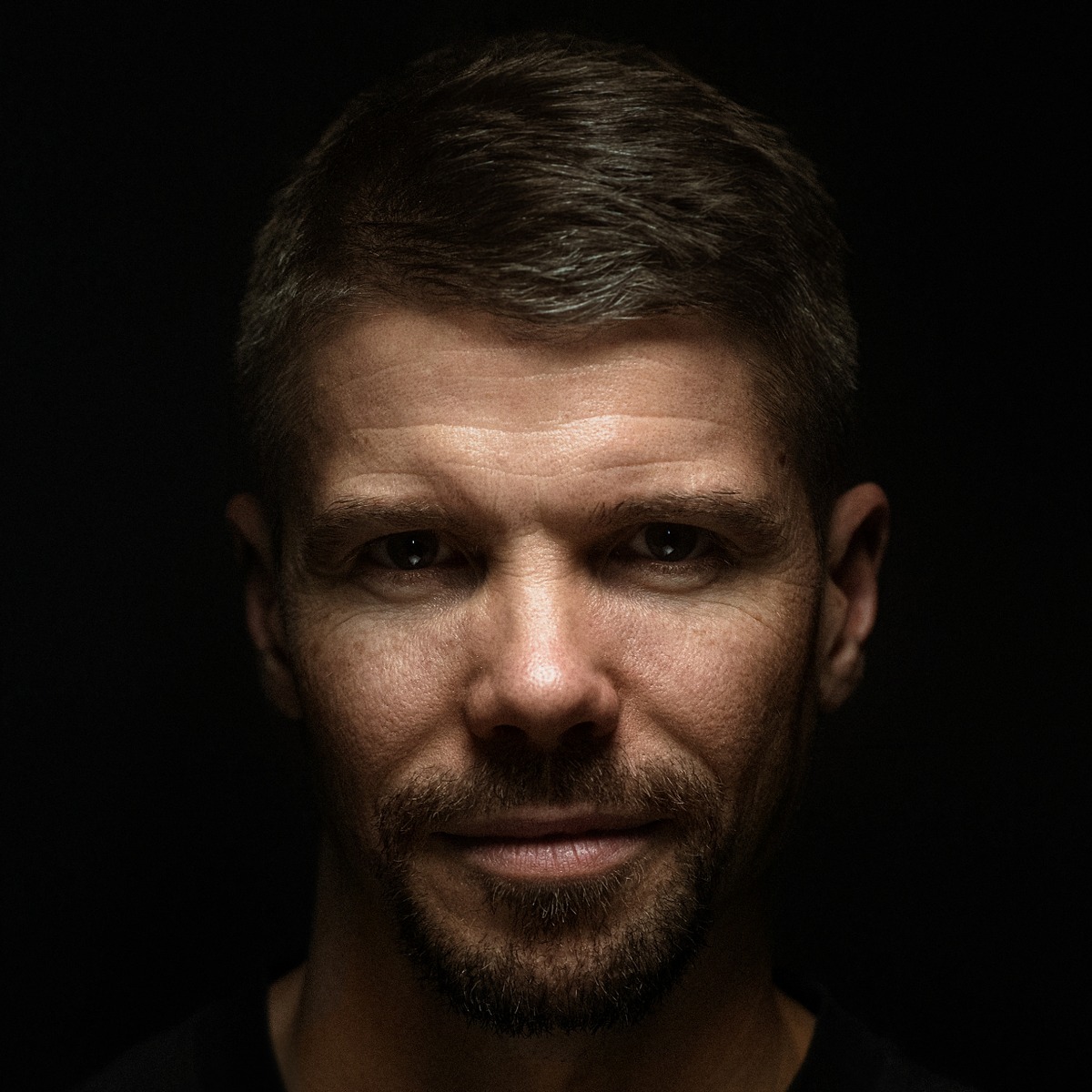
Portrait of Marco Pasini, Founding Partner of MPATHY Consulting

We work at the intersection of emotional resilience, leadership and organisational development — with companies going through change, and with the leadership teams carrying it. We are a certified Positive Intelligence partner.

The programmes are led by Marco Pasini, Founding Partner and certified PQ Coach. He has founded and run three companies, with around 80 people, and knows this kind of sustained pressure first-hand.

He has guided well over 100 participants through the Positive Intelligence programme, several leadership teams among them.

Positive Intelligence has been part of his work for years, first in his own practice, then as a certified coach. He works with it because it was the first thing that stayed with him.

MPATHY Consulting stands for Healthy High Performance — performance and humanity as two sides of the same thing.

How we work

Six months, online, inside your own leadership team.

  1. The first seven weeks

    60 minutes live together, once a week. Plus a video module each leader works through on their own — most people put it on the weekend. And around 15 minutes a day, guided by the app.

  2. Then through to month six

    A 90-minute check-in every four weeks. Refresh, go deeper, add another module depending on what is in front of you.

  3. Format

    All online and in English, fixed dates, no recording. No travel.

  4. Group

    Your leadership team, up to 12 people per cohort. It trains as a whole, including the most senior leader of that unit.

  5. Effort on your side

    No homework, no preparation. The survey, the analysis and the documents for your works council (Betriebsrat) and data protection officer come from us.

  6. Why six months.

    Seven weeks lay the ground. Turning that into habit takes longer — a median of 66 days, with a wide spread. And the transfer runs in three steps: your own regulation first, then how you lead the team, then what reaches the people below. Each of those steps needs someone who asks about it four weeks later.

    60 minutes a week over seven weeks adds up to less than a single standing meeting does over a quarter. And the 15 minutes a day fit into journeys, breaks and the gaps between things — which is exactly where they do their work.

  7. What's included.

    • Seven guided weeks. 60 minutes live each week, your leadership team, up to 12 people, guided by a certified Positive Intelligence coach.
    • Check-ins every four weeks through to month six, 90 minutes each — the part that decides whether it holds.
    • The Positive Intelligence app, twelve months per person, six months beyond the programme itself.
    • The Saboteur assessment with a personal debrief for every leader.
    • The team modules from PQ-Powered Teamwork, once the Fundamentals are in place.
    • The Saboteur map at the start, after the first seven weeks and at the end, with an analysis your team keeps.
    • Two confidential one-to-one conversations with the most senior leader of that unit, 60 minutes each. Whoever leads the unit trains alongside everyone while carrying responsibility for the whole thing. We give that double role its own space.
  8. What it costs.

    From €3,000 net per participant

    for the full six months.

    That covers everything above: the seven guided weeks, the check-ins through to month six, the Positive Intelligence licence and app for twelve months, the assessments and the analyses.

    Pick a time

Two commitments

So the decision doesn't hinge on the unknowns.

Three weeks at low risk

Start, and work with us for three weeks, until every leader has recognised their own pattern and felt the first repetitions land in an ordinary day. If you then tell us it doesn't hold for your team, the programme ends. You pay only the €500 per person that covers the licence and app. The assessment access stays with you, and your team's Saboteur map and its analysis are yours either way.

Course correction

After the first seven weeks we run the Saboteur map again. If it shows no movement, you get two additional check-ins at no charge.

What we commit to

Sickness rates, turnover and revenue depend on far more than one programme. We don't commit to numbers on those.

What we do commit to: this work pushes in exactly those directions. On the load, on how you work together, on the speed at which you get decisions through. How far that shows up in your own numbers is what the final measurement tells you.

Pick a time

The first step

Start with a conversation.

30 to 45 minutes, online. You tell us what is going on with you. We tell you whether this is the right tool for it. That is all it is, and for a start that is all it needs to be.

Who should be in the room.

One person is enough for this first conversation. If you are the one who sees it, put a time in — whether you sit in the leadership team, run a department, or work in HR.

The programme itself works differently. There the leadership team trains as a whole, including the most senior leader of that unit. Depending on where decisions actually get made in your organisation, that is your managing director, a division head or the head of a business area. How you get there is what we work out in the conversation.

Pick a time

Or write to us

If you would rather exchange a few lines before putting a date in.

We reply within two working days, personally. No newsletter, no automated sequence.

Common questions

What leadership teams ask us before they start.

Format and schedule

Taking part

Data protection and the works council

Cost

Why it works

If your question wasn't here, ask it in the conversation. Pick a time.